We Can Do More Than We Think We Can
Music has a way of asking us to step beyond what feels comfortable, and at the Museum of Making Music, that spirit of curiosity and courage shapes everything we do.
One of the quiet lessons music teaches us again and again is that our sense of what’s possible is often smaller than our actual capacity.
If you’ve ever picked up an instrument after some time away, joined an ensemble for the first time, or stood backstage wondering whether you’re truly ready, you know this feeling well. Music has a way of asking us to stretch just beyond what feels comfortable and then rewarding us when we do.
That idea has been resonating deeply with me lately, both personally and professionally, and it feels especially fitting as a reflection for our Museum community.
We are a small team here at the Museum. However, we don’t let that be a limiting factor. Instead, we continue to ask, What if… What if we told this story differently? What if we invited new voices in? What if we looked at this from a different perspective? What if we could do just a little more for our audiences, our members, and for the industry we celebrate?
Keeping a sense of what’s possible is surprisingly freeing. It shifts the question from what should we do to what could we do. That shift gives ideas room to breathe and allows creativity to lead before the necessary parameters step in.
Sometimes we laugh at our own ideas. Sometimes we consider them and move on. And other times, we recognize something that catches our attention, and we sit up and listen more closely.
The reason these questions lead us anywhere is trust. We trust each other. We share ideas openly. We dream without fear of being impractical. And we remind ourselves that meaningful work doesn’t always require a large staff. Instead, it requires curiosity, creativity, commitment, logical thinking, an understanding of workflow and efficiency, and a deep belief that the process itself matters.
This approach is mirrored in music in especially powerful ways.
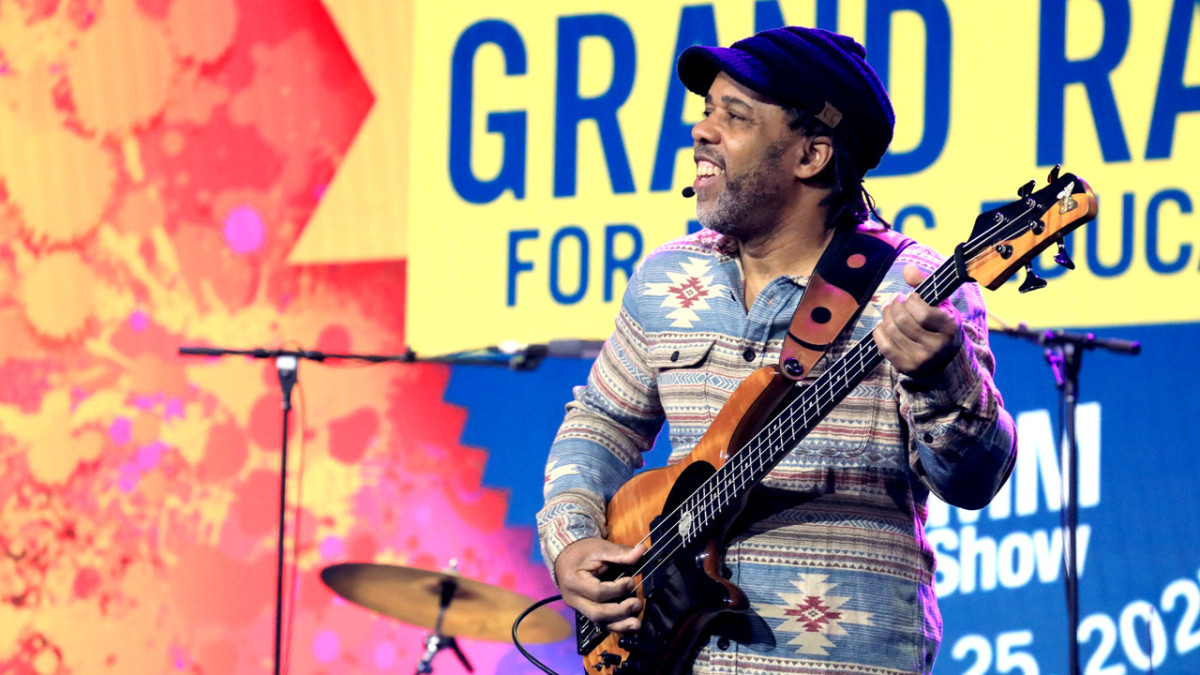
At a recent gathering, renowned bassist Victor Wooten led an exercise with a group of accomplished young musicians in front of an audience of more than a thousand people. First, he asked them to play a few bars of music simply to establish a baseline. He complimented them on their talent, hard work, and flawless execution. They earned an A+.
Then he asked them to play the same passage again, but this time with one clear goal: to listen deeply, not to their own playing, but to one another.
The result was striking. The music became softer and more spacious. It carried greater feeling, even though the notes themselves hadn’t changed.
Next, he asked them to do something unexpected: to play as badly as they could. What emerged was laughter, risk-taking, and individuality. Each young musician’s personality became audible, almost palpable. The lesson was clear. Between being your true self and listening deeply to others, something meaningful happens.
It’s a lesson that applies not just to music, but to life, and to the work we do here at the Museum.
Leading up to this very busy month of January, I found myself in a similar space of stretching beyond expectation. While navigating a demanding and deadline-driven period at the Museum, I had also committed to playing in two groups through our North Coast Strings program, and shortly afterward, to performing two duets in a recital. These were experiences I genuinely wasn’t sure I was fully ready for. But somehow, music invites us to say yes before we feel prepared and then gives us room to grow into the moment.
That’s something we see all the time at the Museum. In adult learners who thought it was “too late” to play. In visitors who discover a new appreciation for instruments they may have previously taken for granted. In students who realize there’s a place for them in the world of music making, not just as performers, but as designers, builders, retailers, engineers, and storytellers.
The Museum exists to celebrate those possibilities. As longtime Museum supporter Kamau Kenyatta so beautifully put it, “The Museum is about possibility.” We honor the people and products that bring music to our world, and we invite everyone to recognize their own place within it. Whether that’s through a first encounter with an instrument, a deeper understanding of the industry, or a renewed sense of creative confidence.
So as we look ahead to new exhibitions, new programs, and new ideas, I keep coming back to this simple truth: we can do more than we think we can. Music shows us that. This Museum embodies it. And together, as a community, we continue to prove it.